
SEO (Search Engine Optimization) is the process of optimizing your website and its content to improve its visibility in search engine results pages (SERPs), such as Google, Bing, or Yahoo. The higher your website ranks on these search engines, the more likely people are to visit it.
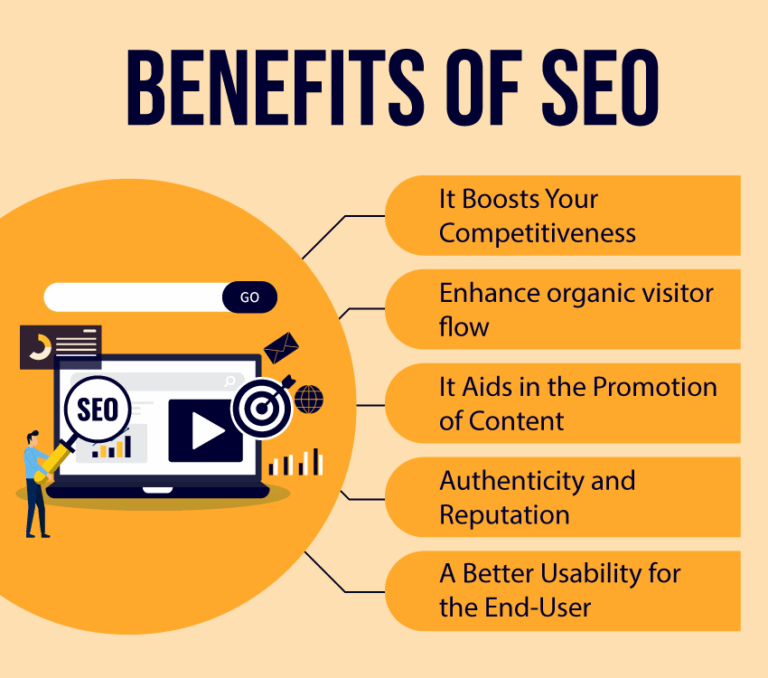
Benefits of SEO
Higher Website Traffic
Improved ROI (Return on Investment)
Increased Brand Awareness
Better Conversion Rates
24/7 Promotion (Unlike ads, SEO works all the time)
Local Visibility for local businesses through Local SEO
Types of SEO
On-Page SEO
Optimizing content, meta tags, headers, keywords, and internal links.
Example: Using the keyword “healthy breakfast recipes” in blog titles and body.
Off-Page SEO
Activities outside your website that affect ranking (like backlinks, social media).
Example: Getting backlinks from a food blog to your recipe website.
Technical SEO
Website backend improvements like speed, mobile-friendliness, indexing, and security.
Example: Using HTTPS, fixing crawl errors, and improving site speed.
Local SEO
Optimizing for local searches (great for small businesses).
Example: Optimizing a Google My Business profile for a local bakery.
E-commerce SEO
Targeted SEO strategies for online stores.
Example: Optimizing product descriptions with high-volume keywords.
Voice Search SEO
Optimizing content to match how people speak into devices (like Alexa or Siri).
Example: Using long-tail keywords like “best Italian restaurant near me.”
Examples of SEO in Action
| Scenario | Example |
|---|---|
| Blog | A blog titled “10 Best Yoga Poses for Beginners” ranks on Google for “yoga for beginners” |
| Local Business | A dentist’s clinic appears in the top 3 Google Maps results for “dentist in Delhi” |
| E-commerce | An online store ranks high for “affordable eco-friendly shoes” thanks to optimized product pages |
| YouTube | A video titled “How to Lose Weight Fast” ranks for weight-loss related searches on YouTube |
Tools Used in SEO
Google Search Console
Google Analytics
Ahrefs / SEMrush / Ubersuggest
Yoast SEO (for WordPress)
Screaming Frog (for technical SEO)